

Syncing users from a CSV file (classic UI)
Overview
Section titled “Overview”Sync a CSV file into Compliance to load or update your users’ signature data by hand, for example when you don’t have a directory sync. To edit a few users, see Choosing how to edit user data.
Preparing the CSV file
Section titled “Preparing the CSV file”-
The column headers must match your signature’s field names exactly. Your signature block’s fields, for example
[[+]] name: title: phone: mobile: [[+]], the CSV column headers.

-
usernamemust always be the first column. The username is the text before@domain.comin an email address. For example, the username for jane.doe@opensense.com isjane.doe. -
Save the spreadsheet as a CSV file.
Syncing the CSV file
Section titled “Syncing the CSV file”-
In the Signatures menu, select Compliance.
-
On the left of the screen, select Sync Tools.
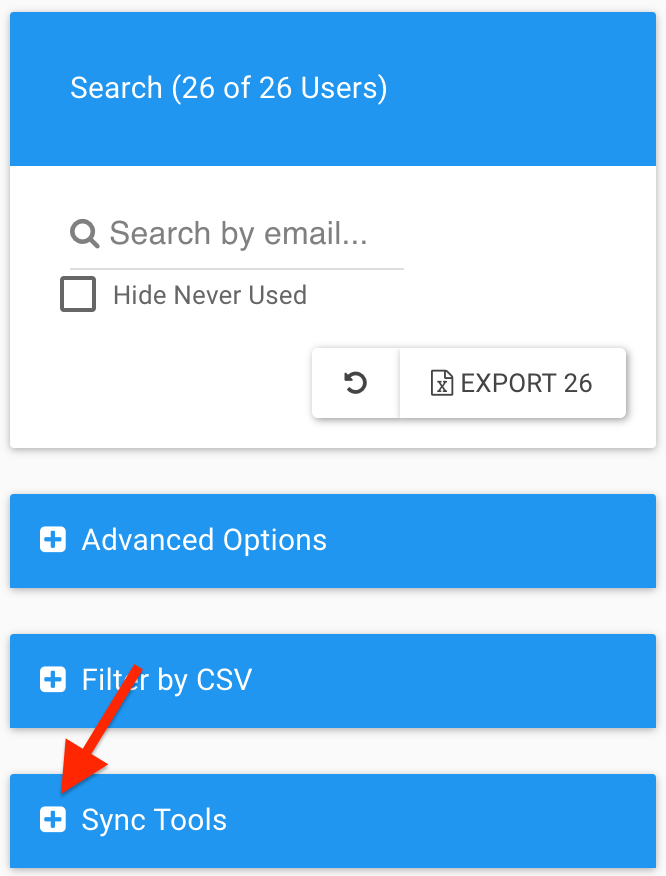
-
Select Choose File, and choose your CSV file.
-
Select Sync CSV.
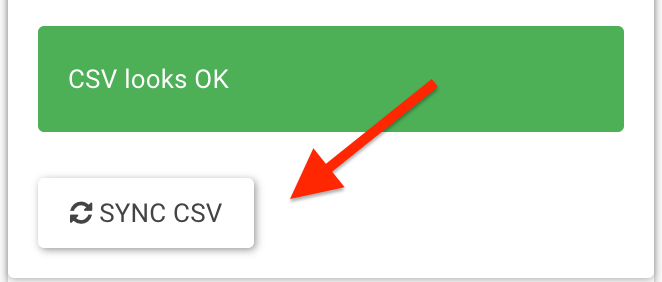
-
When the sync is finished, refresh your browser.
The new data now shows in Compliance.
CSV commands for bulk changes
Section titled “CSV commands for bulk changes”A few CSV commands make bulk changes to a whole column. Add them after the field name in the column header, in the format field-command:
-locked- Locks all the field data in the column (for example,
title-locked). -unlocked- Unlocks all the field data in the column (for example,
name-unlocked). -nosync- Breaks the sync on all the field data in the column (for example,
phone-nosync).

What’s next
Section titled “What’s next”- Editing users in bulk in Users & Compliance (classic UI): change only some fields for many users.
- FTP data sync file requirements: sync from a data source Opensense doesn’t integrate with.